
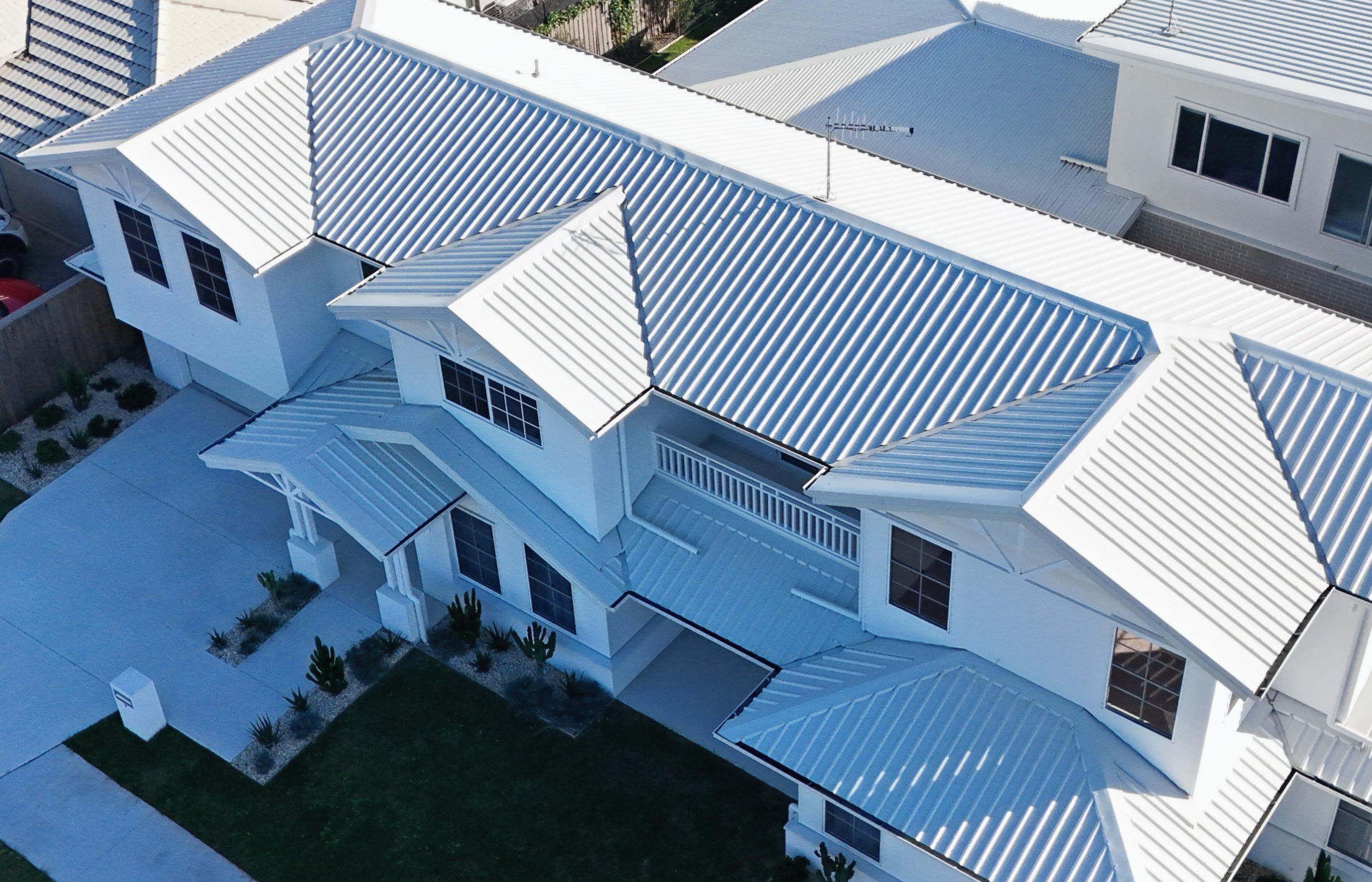
By Steve, Director · Ascend Roofing Group · August 2026 · 8 min read
Replacing a roof is one of the larger jobs a house goes through, and most people only do it once. Knowing the sequence makes it far easier to tell a thorough quote from a thin one — and to spot where a corner is about to be cut.

1. Inspection, before any price is given
A price given over the phone from a satellite image is a guess. A proper inspection means getting on the roof and into the roof space: checking batten condition, tie-downs, existing insulation, valleys, flashings, and whether the frame has taken any deflection under the old roof.
What comes out of this stage is the difference between a quote that holds and a quote that grows once work starts.
2. The written quote
A quote you can rely on names the product and profile, the colour, the fixings, what happens to the battens, what happens to the old roof, and what is excluded. Vague line items are where variations get born.
This is also where any structural work, asbestos handling, or approval requirement should be identified — not discovered mid-job.
3. Preparation and protection
Scaffolding or edge protection goes up, and the site gets set up for material handling and waste. Landscaping, solar panels, air-conditioning units, water tanks and driveways all need thinking about before the first sheet moves.
Solar in particular needs coordination — panels usually have to come off and go back on, which involves a licensed electrician.
4. Tear-off
The old roof comes off, in sections, in a sequence that keeps the house weather-tight as the work progresses. Nobody strips an entire roof in one hit with a storm forecast.
This is the stage where asbestos, if present, changes everything about how the work must be done, contained and disposed of.
5. Battens, tie-downs and structural work
With the roof off, the frame is visible for the first time in decades. Rotten or undersized battens get replaced. Cyclonic tie-downs are installed where required so the new roof is fixed to the structure, not just to the battens.
This is the part homeowners never see and the part that determines whether the roof stays on in a severe storm. A quote that does not mention it is a quote worth questioning.
6. Insulation and sarking
If you are upgrading insulation, this is the only convenient moment to do it — the roof is off. Anticon blanket or sarking goes down before the sheeting.
Skipping it now means paying for access again later. Our insulation guide covers the options.
7. Sheeting, flashings and capping
Sheets are laid, fixed to the specified pattern, and the detail work begins: valleys, ridge capping, barge flashings, penetrations for flues and vents.
Flashings are where roofs leak. Neat sheeting with rushed flashings is a roof that will be back on someone's call-out list.
8. Clean-up and handover
Swarf and offcuts get swept off the roof and out of the gutters — left behind, metal filings rust and stain new sheeting. Magnets go over the ground for screws and offcuts.
You should finish with documentation: what was installed, colour and product, and the workmanship guarantee in writing.
How long does it take?
A straightforward replacement on a standard home is usually a matter of days, not weeks. Larger or steeper roofs, difficult access, structural repairs, asbestos removal and weather all extend it.
The honest version: any roofer who promises an exact finish date before seeing your roof frame is guessing.
Common questions
Do I need to move out during a roof replacement?
Usually not. It is noisy and there will be access around the house, but the work is sequenced to keep the home weather-tight overnight.
What happens if it rains mid-job?
Work is staged so exposed areas can be made secure. This is why nobody should strip more roof than they can close up the same day.
Will my ceilings be damaged?
They should not be. Dust in the roof space is normal; cracked or stained ceilings are not, and are a sign of either a leak or someone working carelessly on the frame.
Talk to a licensed Brisbane roofer
Ascend Roofing Group is a family-owned, QBCC-licensed roofing business working across Brisbane, the Gold Coast, Logan, Ipswich and Moreton Bay. Free inspection, written quote, no obligation.
Get a free quote or call 0419 098 049.